Description
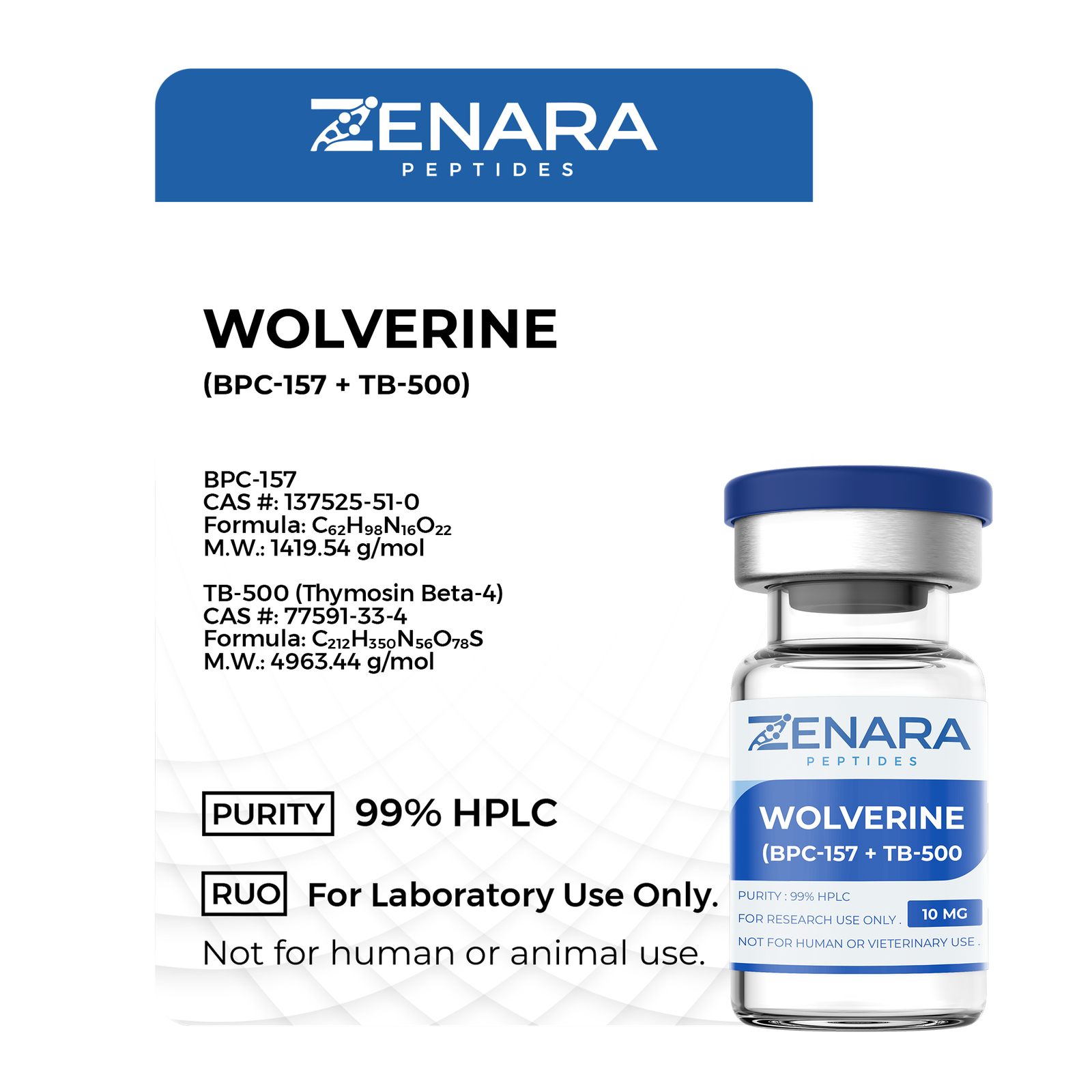
Wolverine (BPC-157 + TB-500) is a research peptide blend developed for laboratory studies involving regenerative biology and cellular signaling. This combination is designed to support investigations into peptide-driven repair mechanisms, extracellular matrix interactions, and cytoskeletal dynamics under controlled experimental conditions.
Biochemical Characteristics
BPC-157 is a stable peptide fragment composed of 15 amino acids, known for its resistance to enzymatic degradation and compatibility with various research conditions. TB-500, a synthetic fragment of thymosin beta-4, is associated with actin-binding properties that influence cellular structure and motility. Together, these peptides provide a complementary framework for studying tissue-related biochemical processes, including protein expression and cellular migration behavior.
Research Applications
Wolverine is widely used in preclinical research exploring tissue regeneration, angiogenesis, and peptide-mediated cellular repair. It is applied in studies examining wound healing models, musculoskeletal recovery pathways, and cellular communication involved in structural repair. Researchers also utilize this combination to investigate how peptides influence fibroblast activity, collagen synthesis, and vascular formation.
Pathway / Mechanistic Context
Mechanistic research involving Wolverine focuses on pathways related to angiogenic signaling, actin cytoskeleton remodeling, and growth factor regulation. BPC-157 is studied for its interaction with nitric oxide pathways and growth factor signaling, while TB-500 is associated with actin dynamics and cellular migration processes. Together, they provide insight into coordinated signaling events that regulate tissue repair and regeneration.
Preclinical Research Summary
Preclinical studies involving BPC-157 and TB-500 have been conducted in vitro and in animal models to evaluate their roles in tissue repair, angiogenesis, and cellular protection. Research findings suggest their combined use offers a valuable model for studying regenerative mechanisms and peptide-driven cellular responses in controlled environments.
Form & Analytical Testing
Wolverine (BPC-157 + TB-500) is supplied as a lyophilized peptide blend and undergoes analytical testing, including HPLC, to confirm purity, identity, and consistency. Each batch is validated to meet research-grade standards required for laboratory experimentation.
RUO Disclaimer
This product is intended for research and laboratory use only. It is not approved for human consumption, medical treatment, veterinary use, cosmetic application, or diagnostic purposes. Handling should be performed only by qualified professionals trained in proper laboratory procedures.




Reviews
There are no reviews yet.