Description
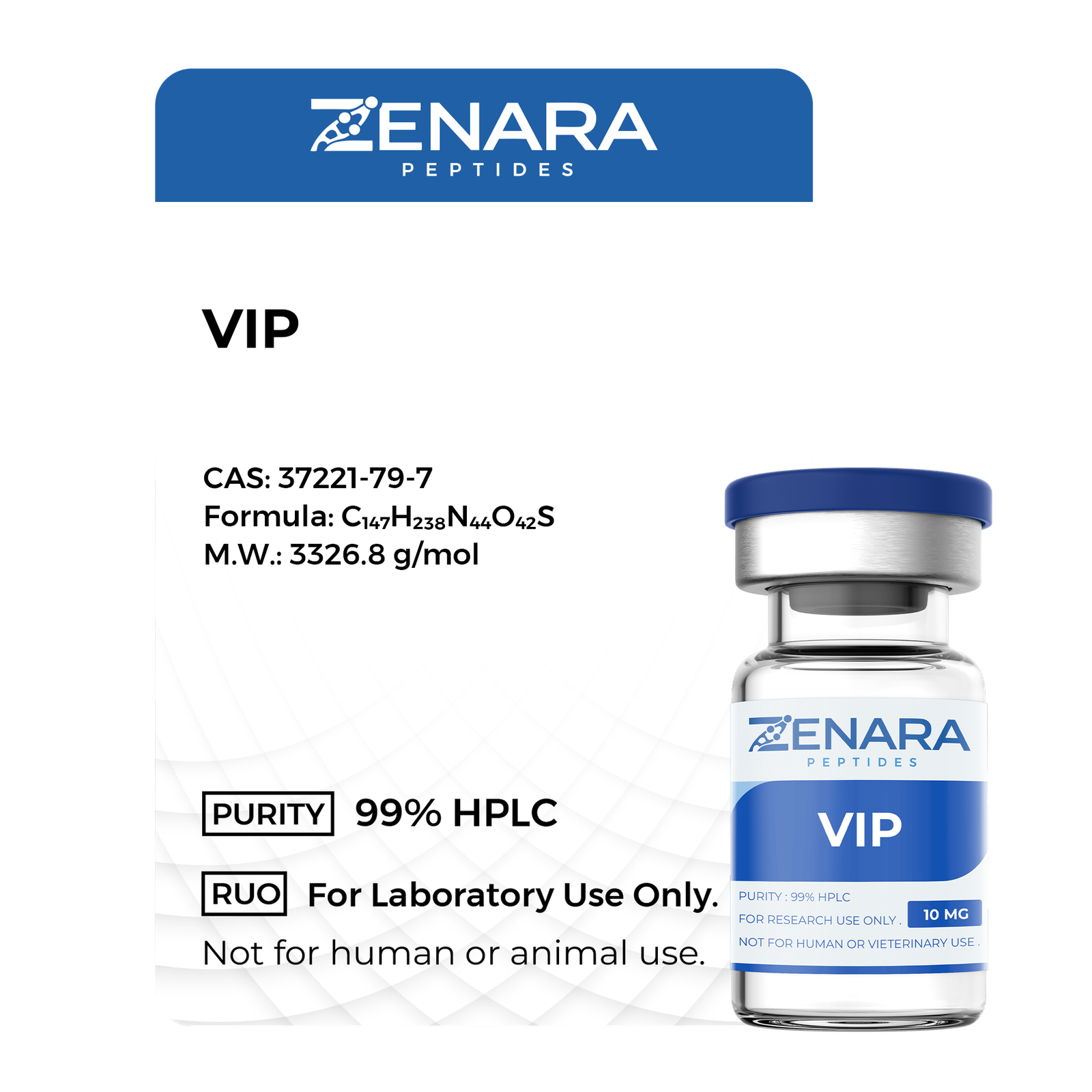
VIP (Vasoactive Intestinal Peptide) is a neuropeptide utilized in laboratory research focused on neuroendocrine signaling and receptor-mediated cellular communication. It is widely studied for its ability to modulate intracellular pathways through interaction with G protein-coupled receptors under controlled experimental conditions.
Biochemical Characteristics
VIP is a 28-amino-acid peptide belonging to the secretin/glucagon family. It exhibits high affinity for VPAC1 and VPAC2 receptors, triggering intracellular signaling cascades primarily through cyclic AMP (cAMP) pathways. Its structure allows it to function as a versatile signaling molecule in studies involving neurotransmission, smooth muscle activity, and hormone secretion.
Research Applications
VIP is extensively used in research examining neuropeptide signaling, receptor binding dynamics, and intracellular communication. It is applied in studies focused on smooth muscle relaxation, neuroimmune interactions, and peptide-regulated secretion processes. Researchers also utilize VIP in experimental models investigating cellular signaling within gastrointestinal, respiratory, and nervous systems.
Pathway / Mechanistic Context
Mechanistic studies of VIP focus on activation of VPAC receptors and subsequent stimulation of adenylate cyclase, leading to increased cAMP production. This signaling cascade influences various downstream pathways involved in cellular communication, gene expression, and regulatory processes within neuroendocrine systems.
Preclinical Research Summary
Preclinical research involving VIP includes in vitro and animal studies evaluating its role in neurotransmission, smooth muscle regulation, and peptide-mediated signaling pathways. These investigations support its use as a research tool for understanding neuropeptide function and receptor signaling mechanisms.
Form & Analytical Testing
VIP is typically supplied as a lyophilized peptide and undergoes analytical testing such as HPLC to confirm purity, identity, and consistency. Quality control ensures suitability for research applications requiring precise peptide characterization.
RUO Disclaimer
This product is intended for research and laboratory use only. It is not approved for human consumption, medical treatment, veterinary use, cosmetic application, or diagnostic purposes. Handling should be performed only by qualified professionals trained in proper laboratory procedures.



Reviews
There are no reviews yet.