
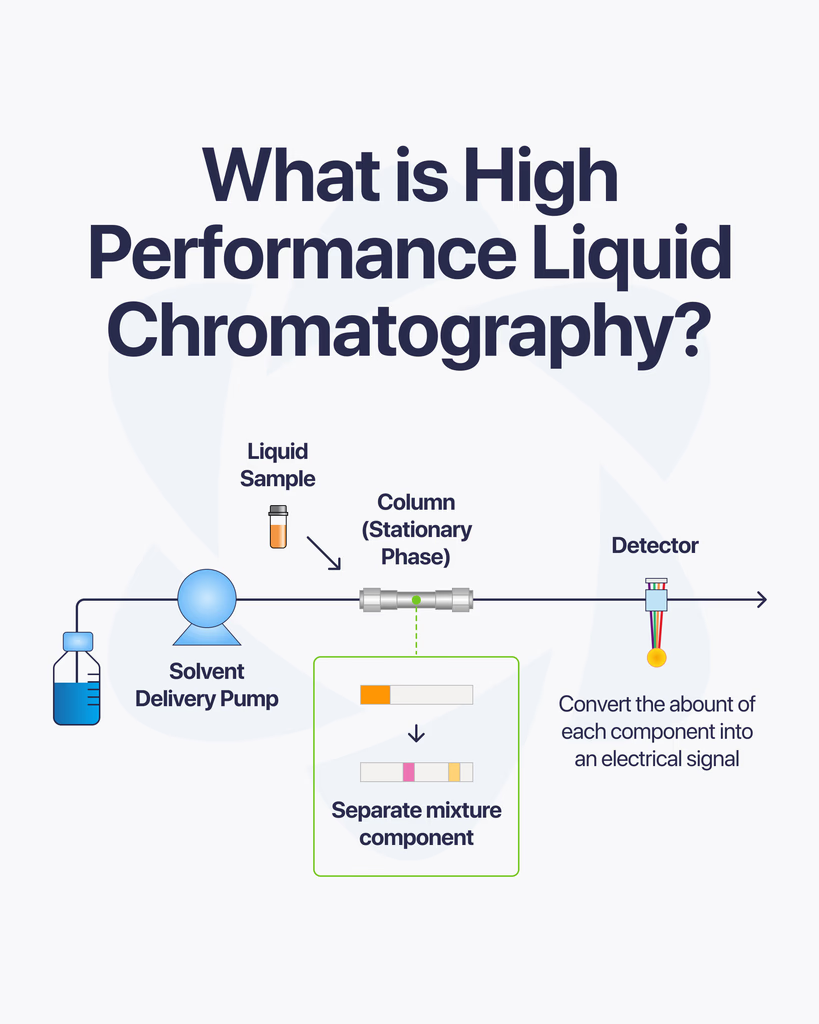
High-Performance Liquid Chromatography, commonly known as HPLC, is one of the most trusted analytical methods used in peptide research. It allows scientists to separate, identify, and measure the components within a sample with a high level of accuracy.
When it comes to peptides, where purity and consistency are critical, HPLC plays a central role in ensuring quality.
Here’s the idea in simple terms. A liquid sample is pushed through a column packed with a special material under high pressure. As the sample moves through this column, different compounds separate based on how they interact with the material inside.
Each compound travels at a different speed. By the time they reach the detector, they appear as separate peaks, allowing researchers to identify and measure each one.
Peptides are complex and sensitive molecules. Even small impurities can affect research results. HPLC helps remove uncertainty by giving a clear breakdown of what’s actually in a sample.
In peptide research, HPLC is commonly used to:
This makes it a key tool for maintaining reliable research standards.
Different variations of HPLC are used depending on what researchers need to analyze.
The output of an HPLC test is usually displayed as a chromatogram. Each peak represents a different component in the sample.
A clean, sharp primary peak typically indicates a high-purity peptide, while additional peaks may point to impurities or degradation products.
Researchers use this data to assess whether a peptide meets required standards for further study.
In peptide research, consistency matters just as much as accuracy. HPLC is widely used in quality control to ensure that every batch meets expected purity levels.
It helps confirm that:
Without this level of analysis, research outcomes could become unreliable.
HPLC is a foundational tool in peptide research. It provides clear, measurable insight into the composition and purity of peptide samples, allowing researchers to work with confidence.
If accuracy and consistency are important, HPLC isn’t optional. It’s essential.